

Built on repetition. Driven by joy. Your journey to faster starts now.
HOKA Training Centre
Whatever your goals or next race, find tailored HOKA training plans and advice.










Understanding the different types of running training
A successful training plan usually features a mixture of the below training types. Whether you're following a ready-made training plan (see HOKA training plans, below) or you're looking to build out your own routine, understanding the importance and benefits of each training type is key to getting the most out of your training programme.
Cross Training
Supports general fitness and overall performance
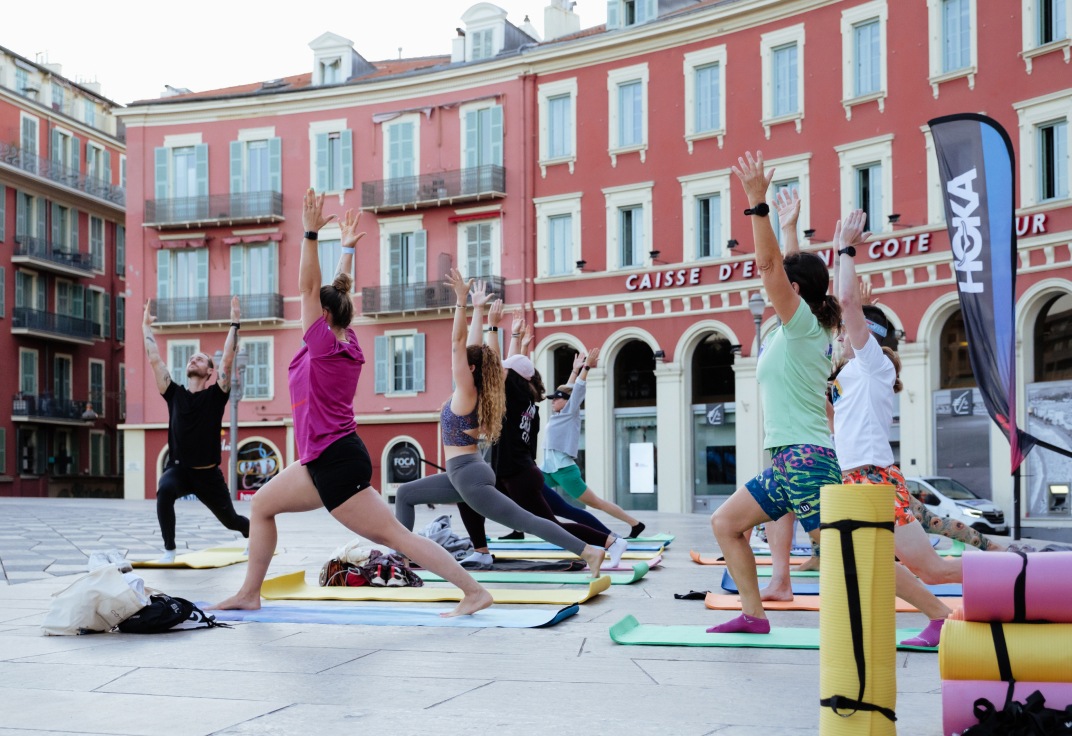
Cross-training is taking up an exercise other than running to develop a specific part of your overall fitness. This gives you a chance to work and hone other muscles, as well as keep your routine varied. It's largely up to you what you'd like to work on and the form you do that in. Many runners take up cycling or spinning to build their endurance and power, whereas others focus on weights, or even strengthening their core with yoga and pilates.

Base Run
Builds aerobic capacity and endurance
This is your default run - the foundation of your routine. It's a short-medium distance done at a comfortable conversational pace. Over time you will build up your base, meaning you can go a little further, or a little faster.

Hill Run
Builds strength and power
This one does as it says on the tin: find a hill, and after you've thoroughly warmed up sprint up the hill and then jog or walk back down. Repeat. The ideal hill is around 400-600m long with a low-medium gradient (aim for 5-8%).

Interval Run
Builds speed
Short bursts of high-intensity running followed by longer periods of recovery (slow jogging, walking or resting). If you're training for a 5k, your intervals will be shorter and faster, whereas for a marathon your intervals will be longer at a slightly lower pace.

Fartlek Run
Builds speed and endurance
Taken from the Swedish for "speed play", fartlek is a form of unstructured interval training. You can go by time, distance or even choose certain landmarks along your route to sprint towards - there are no hard rules here.

Stride Training
Improves running efficiency and acceleration
Strides consist of shorter bouts of faster running with periods of recovery inbetween. A stride is usually between 50-150m long (15-30 seconds of running), and you’re looking to hit around 85-90% of your flat out pace. For recovery, an easy-paced jog for roughly the same distance again should do. Strides are usually run in sets, and can be easily fitted into a longer training session.

Tempo Run
Builds lactic acid tolerance
Tempo runs improve your body's ability to deal with lactic acid buildup. Train as close to your anaerobic threshold as possible; running 'comfortably hard' for 20-30 minutes. Aim for 25-40 seconds/mile faster than your 5k pace, or 85-90% of your max heart rate. Keep the pace steady, ideally on a flat surface.

Long Run
Builds endurance and confidence
A weekly long run is a staple for many runners. Knowing that you can comfortably run a distance will give you confidence for race day. Try to run at the same tempo as your base runs, with the distance increasing over time.

Recovery Run
Helps muscles recover and removes waste
Recovery runs are crucial, especially if you're doing a lot of high-intensity training (running or otherwise), or running more than 50 miles/week. Go within 24 hours of a high-intensity session, and keep it short (max 20-30 minutes). Aim for around 75% of your usual base pace and follow a flat route if possible.
Cross Training
Supports general fitness and overall performance
Cross-training is taking up an exercise other than running to develop a specific part of your overall fitness. This gives you a chance to work and hone other muscles, as well as keep your routine varied. It's largely up to you what you'd like to work on and the form you do that in. Many runners take up cycling or spinning to build their endurance and power, whereas others focus on weights, or even strengthening their core with yoga and pilates.
Base Run
Builds aerobic capacity and endurance
This is your default run - the foundation of your routine. It's a short-medium distance done at a comfortable conversational pace. Over time you will build up your base, meaning you can go a little further, or a little faster.
HOKA training plans
Got a distance in mind? Already signed up for the next race? With our HOKA training plans - created in partnership with our HOKA coaches - you can get the most out of your training and be ready for race day.

5k
(8 weeks)

10k
(10 weeks)

Half Marathon
Beginners (13 weeks)

Half Marathon
Advanced

Marathon
Beginners
5k
(8 weeks)
10k
(10 weeks)
Half Marathon
Beginners (13 weeks)
Half Marathon
Advanced
Marathon
Beginners
5k
(8 weeks)
10k
(10 weeks)
Half Marathon
Beginners (13 weeks)
Half Marathon
Advanced
Marathon
Beginners
Important note
The above training plans are intended as guidance only; it is recommended you seek the advice of a qualified professional before starting a new training routine, as they will be better placed to advise you in line with your personal situation. HOKA cannot accept liability in connection with the use of these training plans.
Find your perfect training partner
Whatever your training routine, find the training shoe for you.





Further reading
Get even more out of your training.



HOKA Training Centre
Whatever your goals or next race, find tailored HOKA training plans and advice.
Understanding the different types of running training
A successful training plan usually features a mixture of the below training types. Whether you're following a ready-made training plan (see HOKA training plans, below) or you're looking to build out your own routine, understanding the importance and benefits of each training type is key to getting the most out of your training programme.
Cross Training
Supports general fitness and overall performance
Cross-training is taking up an exercise other than running to develop a specific part of your overall fitness. This gives you a chance to work and hone other muscles, as well as keep your routine varied. It's largely up to you what you'd like to work on and the form you do that in. Many runners take up cycling or spinning to build their endurance and power, whereas others focus on weights, or even strengthening their core with yoga and pilates.
Base Run
Builds aerobic capacity and endurance
This is your default run - the foundation of your routine. It's a short-medium distance done at a comfortable conversational pace. Over time you will build up your base, meaning you can go a little further, or a little faster.
Hill Run
Builds strength and power
This one does as it says on the tin: find a hill, and after you've thoroughly warmed up sprint up the hill and then jog or walk back down. Repeat. The ideal hill is around 400-600m long with a low-medium gradient (aim for 5-8%).
Interval Run
Builds speed
Short bursts of high-intensity running followed by longer periods of recovery (slow jogging, walking or resting). If you're training for a 5k, your intervals will be shorter and faster, whereas for a marathon your intervals will be longer at a slightly lower pace.
Fartlek Run
Builds speed and endurance
Taken from the Swedish for "speed play", fartlek is a form of unstructured interval training. You can go by time, distance or even choose certain landmarks along your route to sprint towards - there are no hard rules here.
Stride Training
Improves running efficiency and acceleration
Strides consist of shorter bouts of faster running with periods of recovery inbetween. A stride is usually between 50-150m long (15-30 seconds of running), and you’re looking to hit around 85-90% of your flat out pace. For recovery, an easy-paced jog for roughly the same distance again should do. Strides are usually run in sets, and can be easily fitted into a longer training session.
Tempo Run
Builds lactic acid tolerance
Tempo runs improve your body's ability to deal with lactic acid buildup. Train as close to your anaerobic threshold as possible; running 'comfortably hard' for 20-30 minutes. Aim for 25-40 seconds/mile faster than your 5k pace, or 85-90% of your max heart rate. Keep the pace steady, ideally on a flat surface.
Long Run
Builds endurance and confidence
A weekly long run is a staple for many runners. Knowing that you can comfortably run a distance will give you confidence for race day. Try to run at the same tempo as your base runs, with the distance increasing over time.
Recovery Run
Helps muscles recover and removes waste
Recovery runs are crucial, especially if you're doing a lot of high-intensity training (running or otherwise), or running more than 50 miles/week. Go within 24 hours of a high-intensity session, and keep it short (max 20-30 minutes). Aim for around 75% of your usual base pace and follow a flat route if possible.
Cross Training
Supports general fitness and overall performance
Cross-training is taking up an exercise other than running to develop a specific part of your overall fitness. This gives you a chance to work and hone other muscles, as well as keep your routine varied. It's largely up to you what you'd like to work on and the form you do that in. Many runners take up cycling or spinning to build their endurance and power, whereas others focus on weights, or even strengthening their core with yoga and pilates.
Base Run
Builds aerobic capacity and endurance
This is your default run - the foundation of your routine. It's a short-medium distance done at a comfortable conversational pace. Over time you will build up your base, meaning you can go a little further, or a little faster.
HOKA training plans
Got a distance in mind? Already signed up for the next race? With our HOKA training plans - created in partnership with our HOKA coaches - you can get the most out of your training and be ready for race day.
5k
(8 weeks)
10k
(10 weeks)
Half Marathon
Beginners (13 weeks)
Half Marathon
Advanced
Marathon
Beginners
5k
(8 weeks)
10k
(10 weeks)
Half Marathon
Beginners (13 weeks)
Half Marathon
Advanced
Marathon
Beginners
5k
(8 weeks)
10k
(10 weeks)
Half Marathon
Beginners (13 weeks)
Half Marathon
Advanced
Marathon
Beginners
Important note
The above training plans are intended as guidance only; it is recommended you seek the advice of a qualified professional before starting a new training routine, as they will be better placed to advise you in line with your personal situation. HOKA cannot accept liability in connection with the use of these training plans.
Find your perfect training partner
Whatever your training routine, find the training shoe for you.
Further reading
Get even more out of your training.